
Counting Calories
by Journey to Health Program Director, Becky Anderson
Counting calories can be a useful tool, but it’s not the right fit for everyone and it comes with trade-offs for both physical and mental health.
What Is Calorie Counting?
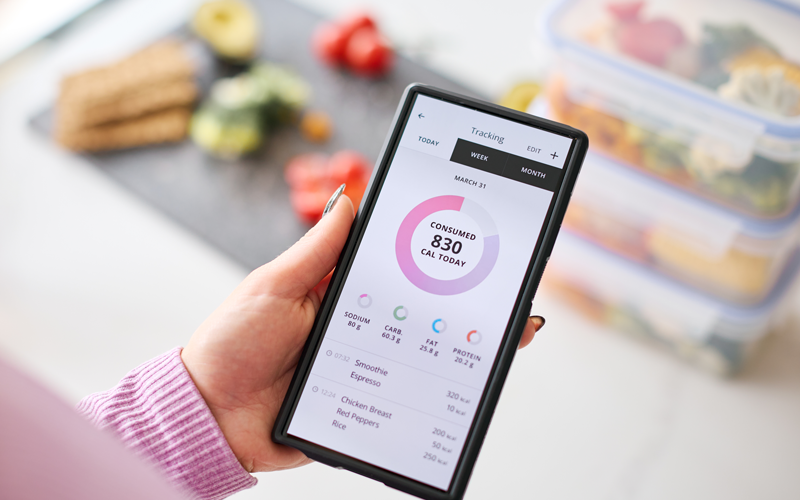
Calorie counting means tracking how much energy you eat and drink each day, usually with a food diary or app, and aiming for a daily target based on your goals (weight loss, maintenance, or gain). Many programs pair this with estimates of how many calories you burn through normal living and exercise to create a daily “budget.”
Pros: Why Calorie Counting Helps
Clear structure for weight goals. Tracking intake makes it easier to create a calorie deficit for weight loss or a surplus for weight gain, and gives a concrete daily number to aim for. Evidence-based weight loss plans often use moderate deficits (for example, a few hundred calories per day) to support gradual, sustainable change.
Better awareness of eating habits. Logging food highlights which items are very high in calories, where portions are larger than you thought, and which meals leave you satisfied versus still hungry. Over time this can teach you which choices are more nutrient-dense and filling for the same or fewer calories.
Portion control and mindfulness. Writing food down or scanning it into an app tends to slow you down and make you more intentional, which can reduce “mindless” snacking and grazing. People often discover hidden calories from drinks, sauces, and snacks that add up during the day.
Flexibility instead of strict food rules. Because the focus is on total daily intake, some approaches let you fit favorite foods in as long as they fit your calorie target, instead of banning entire food groups. That flexibility can feel less restrictive for people who dislike rigid diets.
Useful short-term learning tool. Even if you don’t count forever, a period of tracking can “recalibrate” your sense of portions, energy needs, and which meals keep you full, so you can later eat more intuitively with better internal knowledge.
Cons: What Makes Calorie Counting Problematic
Accuracy is limited. Food labels and databases can be off by a meaningful margin, and restaurant meals can vary by 20–50% from listed calories, so the numbers you see are only estimates. Cooking methods, portion size differences, and individual digestion also change how many calories your body actually absorbs.
It ignores food quality. A day of ultra-processed, low-fiber foods can “fit your calories” just as easily as a day of whole grains, lean proteins, fruits, and vegetables, even though the health impact is very different. Focusing narrowly on numbers can pull attention away from nutrients, gut health, and how you actually feel after eating.
It can strain mental health. For some people, tracking every bite increases anxiety, perfectionism, and guilt, especially when they go “over” an arbitrary target. This can turn eating into constant math and moral judgments about “good” and “bad” foods, which may worsen body image, food obsession, and disordered eating risk.
Disconnection from body signals. Relying on an app’s number can train you to ignore hunger and fullness (for example, skipping a meal because you hit your limit, or eating more just to “use up” calories left). Over time, that can make it harder to recognize your own cues and to practice intuitive, internal regulation of food intake.
Sustainability challenges. Many people find meticulous tracking tedious over the long term and eventually stop, which can lead to cycles of strict control, burnout, and rebound eating or “weight cycling.” When severe restriction doesn’t lead to expected results, frustration and depressive symptoms may increase.
When Calorie Counting May Be Helpful
- You like data and structure and don’t feel overly anxious about numbers.
- You’re using it short term to learn about portions and energy needs, alongside a focus on food quality and how you feel.
- You’re working with a health professional who can help you set realistic targets and watch for signs of burnout or disordered patterns.
In these situations, a flexible approach (occasional tracking, approximate logging, and room for cultural foods and enjoyment) may support your goals without taking over your life.
When It Might Not Be a Good Fit
- You have a history of disordered eating, strong body image distress, or are already very anxious about food, weight, or numbers.
- Tracking makes you feel obsessive, guilty, or afraid to eat socially or to eat without logging.
- You find yourself constantly hungry, fatigued, or mood-changed because your target is very low or your diet is missing key nutrients.
In these cases, approaches that emphasize internal cues (hunger and fullness), consistent meals, nutrient-dense foods, movement, sleep, and stress management often support health and weight more gently, without the same psychological burden.
As always, if you have questions or need help with ANYTHING, never hesitate to reach out.